
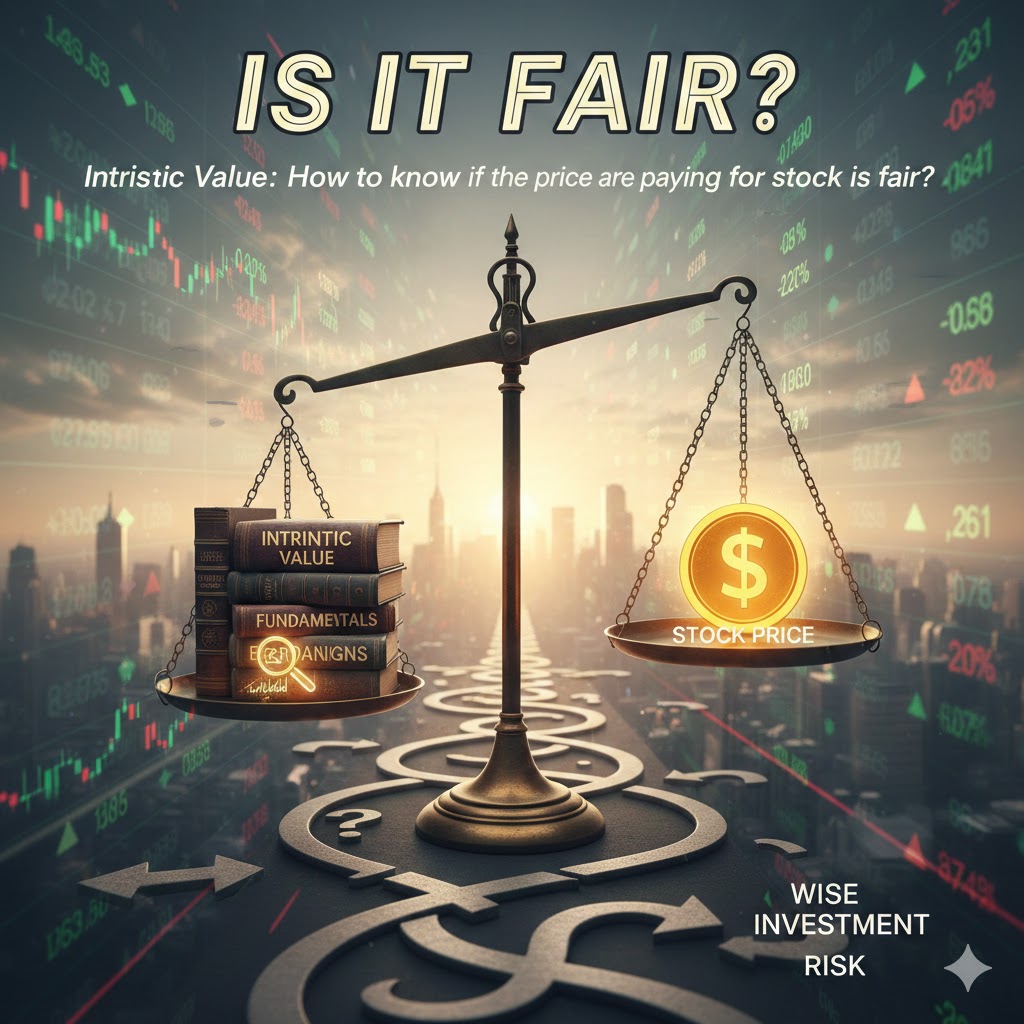
Understanding intrinsic value helps you avoid buying expensive stocks and buy fairly priced stocks
“Price is what you pay, and value is what you get,” said Warren Buffett explaining the distinction between cost and true worth. In investing, it is commonly called intrinsic value. It is a re- minder that we should not equate an asset’s market price with its fair value called Intrinsic Value.
The gap between the asset’s market price and its intrinsic value indicates whether it is undervalued, fairly valued, or overvalued. If the market price is less than the intrinsic value, the asset is considered undervalued, whereas if the market price is more than the intrinsic value, the asset is said to be overvalued.
While price is objective and visible in the marketplace, value is subjective, formed by fundamentals such as earnings, cash flows and future growth expectations and assets. A stock trading at a seemingly high price can still be a worthwhile investment if its future earnings, growth potential and financial strength are high that justifies the cost. And, a low-priced stock may prove risky if the business is becoming weak.
Intrinsic Value Calculation:
Dividend Discount Model
This method values a company based on its ability to generate income. It is based on the time value of money—money today is worth more than the same amount in the future because it can earn returns.
For instance, Rs.100 today becomes Rs.108 in
a year at 8% interest with annual compounding. So Rs.108 next year is worth Rs.100 today. Conversely, Rs.100 receivable after a year has a present value of Rs.92.59
Intrinsic value is calculated as the pre sent value of expected future cash flows (In the form of Expected Dividends and Final Value on redemption) discounted at the investor’s required rate of return.
Key inputs required:
- Stream of income (dividends or cash flows and final value on selling- FV)
- Discount rate
- Timing of cash flows
Remember, unlike bonds with fixed payments, equity valuations are based on uncertain future earnings.
Equity valuation is highly sensitive to underlying assumptions. Even small changes in expected dividend growth, cash flows, or discount rate can produce substantial changes in results. The discount rate, representing the return investors demand, has a pronounced effect on intrinsic value. When the discount rate rises, often due to increased risk perceptions or higher interest rates, equity valuations decline. Conversely, a lower discount rate boosts valuations by increasing the present value of future cash flows.
Comments are closed