
Introduction
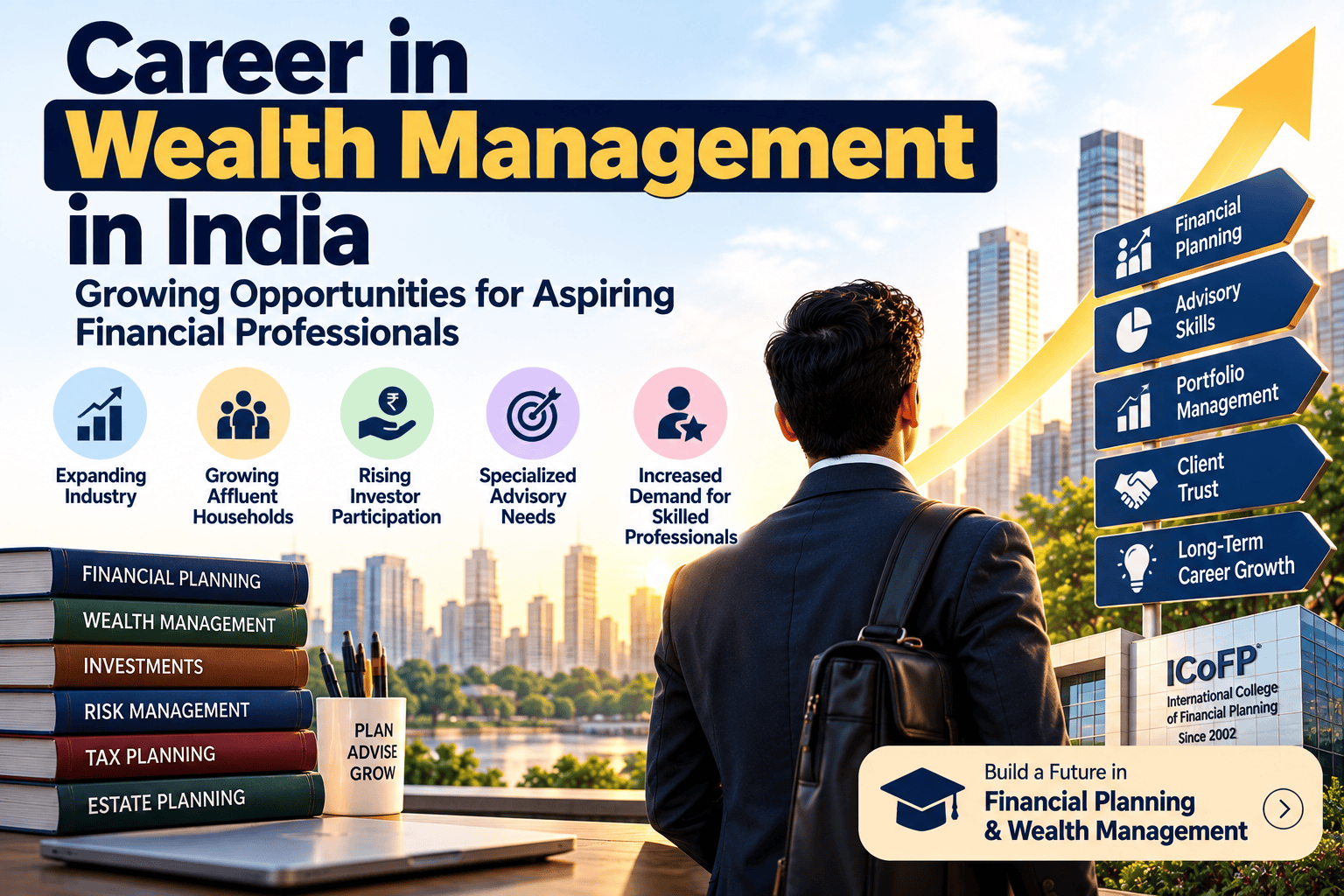
India’s wealth management industry is expanding as investor participation rises, affluent households grow, and advisory needs become more specialized across cities and client segments. That growth is increasing demand for professionals who can combine financial knowledge, client trust, and practical advisory skills in one role.
For students and aspiring financial professionals, a career in wealth management in India now offers a clearer and more structured path than ever before, especially through focused education in financial planning, advisory, and portfolio management. Institutions such as International College of Financial Planning (ICoFP), established in 2002 and positioned around financial planning and wealth management education, connect this demand with career-focused programs such as CFP® certification.
What does a wealth management professional do?
A wealth management professional helps clients make informed decisions across investments, protection, tax efficiency, retirement planning, and long-term wealth creation. Depending on the role, the work may involve product explanation, portfolio review, risk profiling, client servicing, relationship management, and coordination with internal advisory or research teams.
Common entry and growth roles include:
● Relationship Manager
● Wealth Management Executive
● Financial Planning Associate
● Investment Counselor
● Private Banker
● Wealth Product Specialist
● Para Planner
● Virtual Relationship Manager
What are the salary ranges in wealth management in India?
Salary levels vary by city, employer type, role complexity, and whether the candidate is entering through a training-led or direct hiring route. Early-career compensation is typically stronger when candidates bring advisory readiness, certifications, and client-facing skills rather than only a general degree.
Indicative Salary Bands in India (2026)
The following salary ranges are indicative and based on publicly available compensation data from platforms such as AmbitionBox. Actual salaries may vary depending on the employer, location, experience, qualifications, and performance.
● Relationship Manager: Approximately ₹4.3 lakh to ₹6 lakh per annum for professionals with 1–4 years of experience, with additional incentives based on client acquisition and portfolio performance.
● Financial Planning Associate / Wealth Management Associate: Approximately ₹2.5 lakh to ₹6 lakh per annum for entry-level to early-career professionals. Candidates pursuing or holding the CFP® certification may have access to better growth opportunities as they gain experience.
● Investment Counselor or Advisory Support: Generally ₹4 lakh to ₹8 lakh per annum, depending on the organization, advisory responsibilities, and product expertise. Compensation typically increases with experience and client-facing responsibilities.
● Private Banker: Typically ₹10 lakh per annum and above, with total compensation often including performance-linked incentives for managing high-net-worth clients and investment portfolios.
● Wealth Product Specialist: Usually ₹6 lakh to ₹12 lakh per annum, depending on the product specialization, distribution experience, and the organization's compensation structure.
Note: Salary figures are indicative and compiled from publicly available salary reports on AmbitionBox. Compensation varies by employer, city, experience, role, and individual performance.
Top Skills Employers Look for in Wealth Management in 2026
Wealth management employers increasingly value a blended skill set that combines technical understanding with real client capability. Candidates who can explain products clearly, interpret client goals, and work within regulated advisory environments are better placed for growth.
Core technical skills
● Investment basics and asset allocation understanding.
● Tax and retirement planning awareness.
● Insurance and risk planning knowledge.
● Portfolio review and product suitability judgment.
● Familiarity with compliance, ethics, and regulatory frameworks.
Core professional skills
● Client communication and trust-building.
● Need analysis and goal-based advisory conversations.
● Digital fluency with CRM, onboarding, and advisory tools.
● Presentation, follow-up, and objection handling.
● Consistency, discipline, and relationship management mindset.
Which education path supports a wealth management career?
A general graduation degree may create eligibility, but specialized education improves role readiness in wealth management. In India, structured pathways in financial planning and wealth management are especially useful because the industry rewards practical advisory knowledge, client readiness, and ethical standards.
Relevant pathways include:
● CFP® education for candidates targeting financial planning and advisory depth.
● ACWM for candidates who want an industry-oriented start in wealth management and BFSI roles.
● PGDFP™ for learners seeking a deeper academic-professional route in financial planning, aligned with wealth and advisory careers.
Who should consider this career?
A career in wealth management offers rewarding opportunities for individuals who enjoy finance, analytical thinking, and helping clients achieve their financial goals. It is especially relevant for those seeking a structured career in financial planning, investment management, and advisory services with strong long-term growth potential.
This path can fit
● Fresh graduates seeking structured entry into BFSI and advisory careers.
● Working professionals who want to move into wealth, advisory, or relationship roles.
● CFP® aspirants aiming for recognized financial planning credibility.
● Candidates from emerging cities who want to access growth in a national wealth market, not only metro-based jobs.